- Recommend on FacebookTweet about itPost de: Constantin Goagea
We were all rich and cool, the world was a crack bar known by everybody from a magazine, where everyone looked full of admiration how we got in our expensive cars, then, yes, I would invite everybody at home, as I was rich and everyone would envy me, as I used to press the remote control and a pool on the ceiling would come up,
- Recommend on FacebookTweet about it
(2).jpg) Post de: Constantin GoageaThe most beneficial trade has become nowadays that which deals with luck. Such a relative, intangible and evanescent value has each time more and more offices, public consumption, even temples. Until a few years ago people were still thinking of opening restaurants or bringing clothes from all over the world and starting up a design boutique. Today – in Bucharest at least, but I think it is the same in many other cities – you find spaces that celebrate luck.
Post de: Constantin GoageaThe most beneficial trade has become nowadays that which deals with luck. Such a relative, intangible and evanescent value has each time more and more offices, public consumption, even temples. Until a few years ago people were still thinking of opening restaurants or bringing clothes from all over the world and starting up a design boutique. Today – in Bucharest at least, but I think it is the same in many other cities – you find spaces that celebrate luck.- Recommend on FacebookTweet about itPost de: Cosmin CaciucFor a couple of years now we keep on mapping alterantive practices among our neighbours – all sorts of “action-isms” which do not look like genuine architecture in the glorious meaning of achievements meant to last over centuries, but which are connected to dusting, clearing and painting things in deprived areas, as a part-time or voluntary work.
- Recommend on FacebookTweet about itPost de: Constantin GoageaFor the last three days in Prague, I assisted toan international project about activism and NGOs as a possible dominant practice in the future. The English title (NGOs shaping cities) draws the attention on the fact that activism turn into a global trend as a reaction to world economy.
- Recommend on FacebookTweet about it
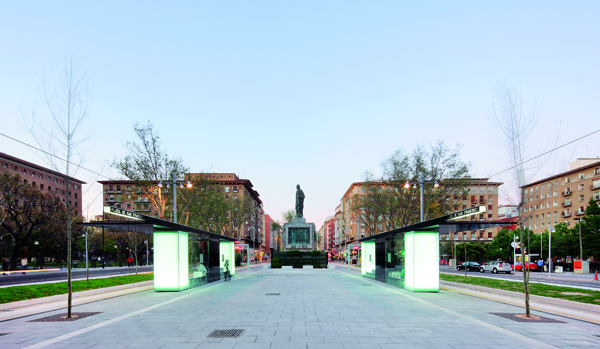 Post de: Iñaki Alday, Margarita Jover
Aldayjover’s scheme is a brilliant example of integrating traffic concepts, a vision at city scale, public space and object design.
Rebirth of the tram
Since the 1960s, as in other Spanish cities, a transformation occurred in the realm of traffic space in Zaragoza. Previously, there was reduced circulation and little separation between foot traffic and motor traffic.- Recommend on FacebookTweet about it
 Post de: Stefan Ghenciulescu
The main ingredients of this project are a mythical and ambitious metropolis – London; one event – the Olympic Games; a dynamic and ambitious mayor – Boris Johnson; a very powerful corporation – ArcelorMittal and its Chair – Lakshmi Mital; a cooperation between an exceptional artist (and always appealing to a broad audience) – Anish Kapoor and a visionary engineer – Cecil Balmond.
- Recommend on FacebookTweet about it
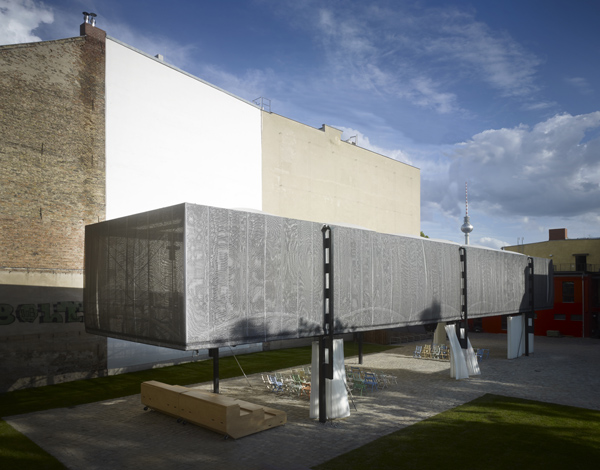 Post de: Cosmin Caciuc, Cosmina Goagea
The urban life exploration lab has moved from America to Europe, proving to be a model of public dialogue and active participation.
After the BMW Guggenheim Lab New York cultural project was launched in New York last summer, the mobile lab came to Berlin where it ran from 15 June to 29 July. The open-air pavilion designed by Atelier Bow-Wow (which was presented in Zeppelin #98) is hosted in one of the inner courtyards of a former 19th century beer factory: the Pfefferberg complex in the Prenzlauer Berg district (Schönhauser Allee 176).
- Recommend on FacebookTweet about itPost de: Constantin Goagea
5.32 GMT
Curiosity is a car with big wheels, similar to a tractor. It is 3 m long and has almost the same width, and it explores Mars. It landed there very early on 6 August. It has 17 video cameras which send the images it collects there via the radio. Once in a while, the people on earth see Mars through the electronic eyes of Curiosity.- Recommend on FacebookTweet about it

Stefan Tuchila climbed over 80 buildings and took several thousand photographs of Bucharest: another kind of urban research, a methodical and spectacular urban mapping. And a support for the recollection of a city that is constantly reinventing itself.
- Recommend on Facebook

Architecture.
City.
Society.
Architecture.
City.
Society.
≡
Articles published by: Nickname
Post de: Constantin Goagea
When you get in your forties, you swear that the whole male world is moving in a more or less predictable way: you have stories to tell which make young women gaze in wonder, you can count some important work experiences, fulfilled personal projects or at least clear ones, a secure job, a company, children, wife, one mistress or more, each depending on the case, lots of travels, cars, motorcycles, an apartment, a better house.
