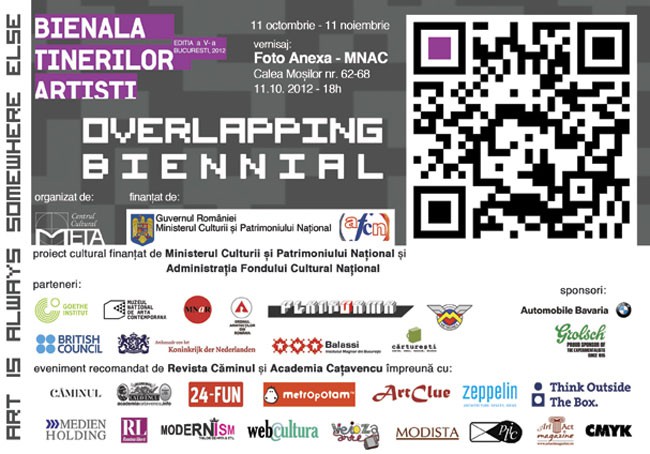
Between 11th of October – 11th of November, META Cultural Foundation organises in Bucharest the Biennial of Young Artists. The title of this year’s edition is Overlapping Biennial and its concept emerged from a project of contextual art. The Biennial furthers an innovative way of shaping the interaction between the audience and art. Mostly, Overlapping Biennial is a virtual event. The connection between the virtual world and reality is achived through QR codes – a type of barcode – which generate content after being scaned with a telephone/tablet/PDA.
- Recommend on FacebookTweet about it
.jpg)
Invited by Ruxandra Balaci
Thursday 4.10.2012, h18.30 / MNAC Auditorium, et. 4
Pirkko Siitari, Director of Kiasma Museum of Contemporary Art, Helsinki and Ruxandra Balaci, Artistic Director of MNAC Bucharest, in conversation about the strategy of the museums in recession, a introduction about KIASMA and some comments about the subREAL retrospective.
- Recommend on FacebookTweet about it
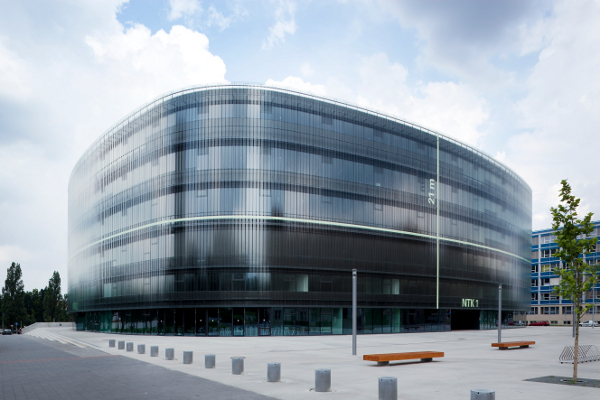 An atrium for booksThe National Technical Library in Prague shows a sustainable approach, of a will to create public space and also of a collaboration between Projektil architekti and invited artists.Text: Projektil architektiPhoto: Andrea Thiel LhotakovaMany different sources inspired the architectural concept for the National Technical Library in Prague. First, there is a spatial context influence, which involves the historical urban plans for the whole area as well as its present significance. Second, the concept is our answer to the idea of the institution and especially to the role of the library in today’s society.
- Recommend on FacebookTweet about it

Text: Stefan Ghenciulescu.
Facebook page here.
This article was published in Zeppelin Magazine, number 103.
Combina, the brand lately built by designer Alexe Popescu, speaks about mixes and matches. The two items presented here are not the result of a stylistic mix though, but start from the use, the material and the obsessive exploitation of a constructive procedure.
- Recommend on FacebookTweet about it
.jpg)
Design: Larix Studio
Text & Photo: Köllo Miklós
This article was published in Zepeplin magazine, number 101.
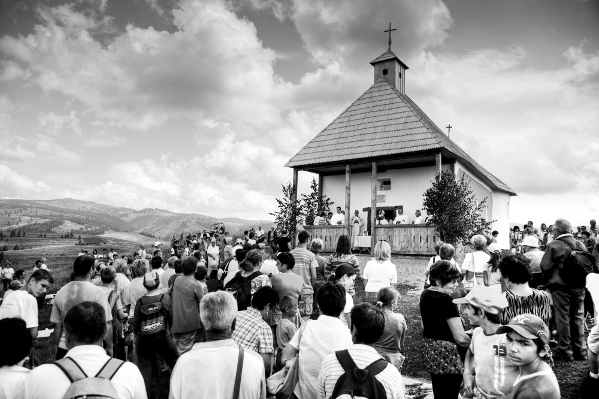
The restoration of St Ann’s Chapel near Gheorgheni town achieves a balance between a discreet intervention, the re-emergence of some historical phases without resorting to pastiche. St. Ann’s Chapel is located on Mount Csobot, in the outskirts of Gheorgheni town along the old trade road routing between Transylvania and Moldavia provinces. It has a kind of peculiar history.
- Recommend on FacebookTweet about it
.jpg) If the old Romanian saying “In fair weather prepare for foul” still makes sense today (translated literally from Romanian: “in summer prepare your sledge and in winter your cart”), the idea of an article on bicycles in the season of those nightmarish winter tires looks quite right. The more so as it deals with some particular bikes that make ordinary ones appear as if they “go by foot”: it is all about the winners of Eurobike Awards competition organized by IF – International Forum Design.
If the old Romanian saying “In fair weather prepare for foul” still makes sense today (translated literally from Romanian: “in summer prepare your sledge and in winter your cart”), the idea of an article on bicycles in the season of those nightmarish winter tires looks quite right. The more so as it deals with some particular bikes that make ordinary ones appear as if they “go by foot”: it is all about the winners of Eurobike Awards competition organized by IF – International Forum Design.- Recommend on FacebookTweet about it
.jpg)
Energy efficient or “green” mortgages represent a potential for Romania to take the lead in the region by introducing an innovative real estate financial tool for reducing energy costs, improving energy security and increasing adoption of better construction technology, materials and techniques.
This pilot project aims at creating a controlled environment through a consortium between a bank, a developer and an energy auditor to implement the concept of energy efficient mortgages in Romania and demonstrate its financial, social and environmental benefits.- Recommend on FacebookTweet about it
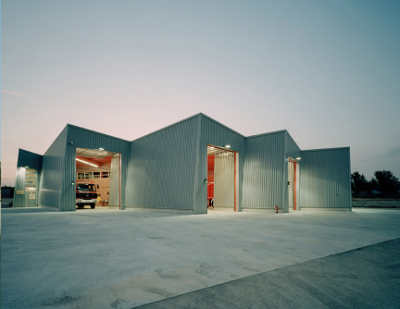
A fire station showing the authors’ interest in both a dialogue with the surrounding landscape and a need to provide a tailor-made space for a particularly functional program.
Text: Andreu Arriola & Carme Fiol
Photo: Sergio Belinchón, Beat Marugg, Arriola & Fiol
This article was published in zeppelin magazin number 99.- Recommend on FacebookTweet about it
.jpg)
The rehabilitation of some spaces in the centre of a small Polish town increases the value of the place through reasonable investments, rigor and intelligent interweaving of old fragments and new interventions.
Text: Cosmin Caciuc
Foto: Tomasz Zakrzewski
This article was published in zeppelin magazin number 99.- Recommend on FacebookTweet about it
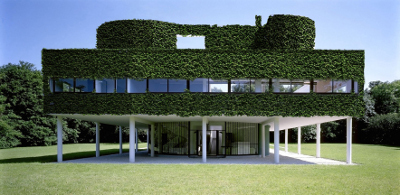
A critical view on the difference between a true sustainability and the „green” demagogy in architecture.
Sustainability currently shares many qualities with God; supreme concept, omnipotent, omnipresent, and omniscient; creator and judge, protector, and (…) saviour of the universe and the humanity. And, like God, it has millions of believers. Since we humans are relatively simpleminded and suspicious and need evidence before belief can become conviction, Green has come to represent sustainability; has become its incarnation in the human world. But sustainability, like God, might not have a form, nor a colour…
- Recommend on Facebook

Architecture.
City.
Society.
