Text: Ștefan Ghenciulescu, Cătălina Frâncu
María del Carmen Abascal, known as Maricarmen, has died. She was the woman evicted from the Madrid flat that had been her home for more than 70 years. Her eviction sparked a wave of protests and a government crisis in Spain, and it has come to stand for a housing crisis that affects us all, from the wealthiest countries to the billions of people living in precarious conditions.
Earlier, smaller crises had consequences of their own. In the 19th century they made the need for social housing plain. Between the wars they produced the first mass housing programmes and the new formulas of modernism. After 1945 they led to vast housing estates, built by democracies and dictatorships alike. Since then, states and local authorities have pulled out of housebuilding almost everywhere, and almost completely. Part of the reason is that they simply no longer have the means. Part of it is the legacy of the post-war years. The failures of mass housing in design and construction, its uniformity and rigidity, the way it was imposed from above and ignored people’s basic needs, made us turn our backs on any attempt to manage change and need on that scale. But the problem is ideological as well. Today’s prevailing ultra-liberalism, and a deep scepticism towards anything resembling solidarity, have persuaded us that the market, left to its own devices, will solve this too.
It won’t, any more than the state could on its own. We need to find and reinvent ways of working together and helping one another. We need to think big and boldly, while also making use of every niche available.
All but two features in this issue are devoted to collective housing. At its heart is a dossier on collaborative housing in Barcelona, guest-edited by Ivan Mata and Fina Urpí of Vaivera Arquitectura, who have designed such projects themselves. In post-socialist countries, words like “cooperation”, “cooperative”, “community” and “activism” still carry negative connotations. In Barcelona they describe real, democratic principles of action. Here, too, the city leads the way.
Beyond the dossier, Irina Davidovici discusses cohousing in a very different system, the Swiss one, which shows that private initiative can also be a basis for cooperation. Four projects in Paris explore another theme, complex densification. They insert housing alongside other uses in the city centre and on former industrial land, and they combine market housing with different forms of assisted living.
Finally, we come back to Romania. Bogdan Suditu examines the country’s housing problem and the huge obstacles to building a fairer, more balanced system. And LTFB Studio presents Romania’s first cohousing project. Its initiators were the architects themselves, which we hope will set an example for the profession.
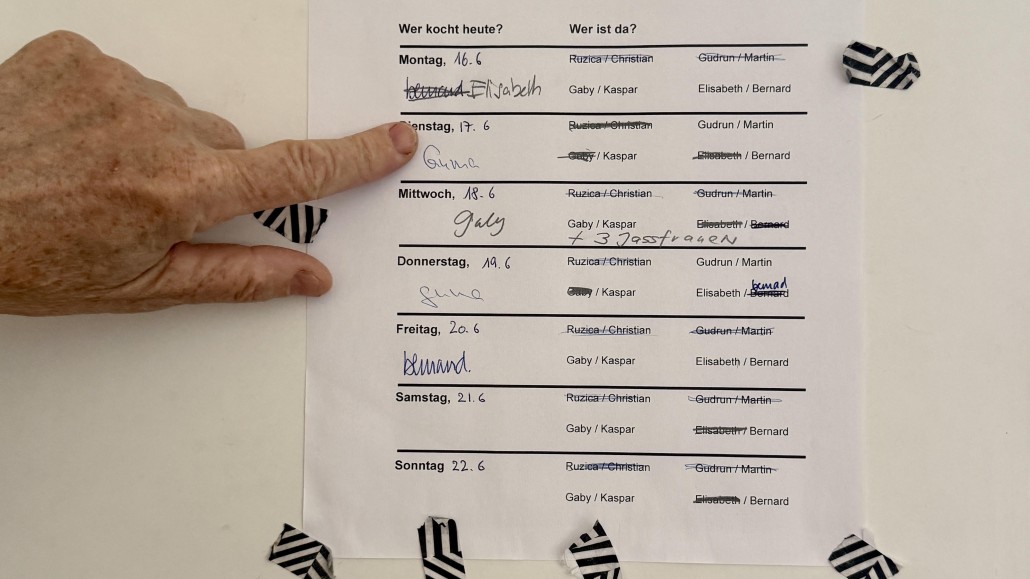
*Photo: Cooking and meal rota in one of the Swiss cooperatives. On the note: “Who’s cooking today?” and “Who’s in for dinner?”
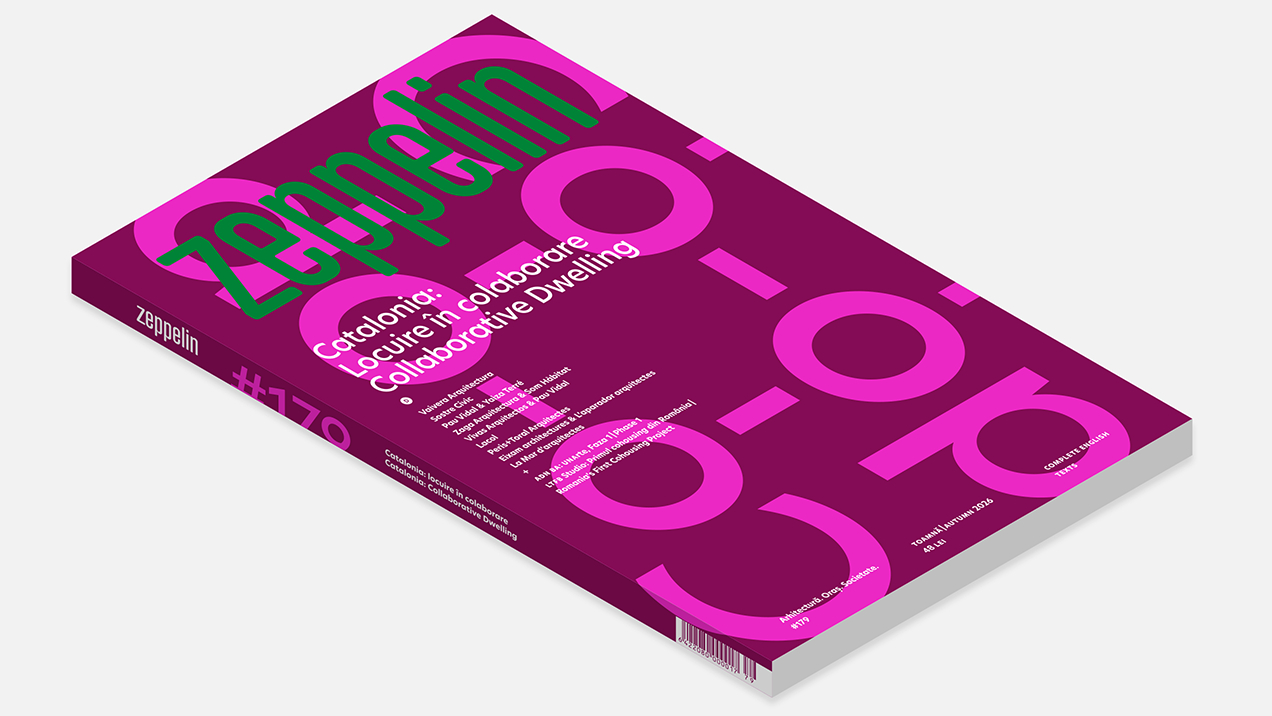
Zeppelin #179 – „Catalonia. Collaborative Dwelling”