The „Casino Constanța Exhibition Center” project, designed by our coleagues from Zeppelin Design, was awarded at IF DESIGN AWARD 2026 – Interior Architecture / Installation, on which occasion we are publishing online the article in which we presented it in Zeppelin magazine #176.
Text: Cosmina Goagea
Foto: Vlad Pătru
INTRO
In 1910, when the Casino first lit up its lights, it represented a statement of modernity, a manifesto of a courageous and avant-garde Romania, looking to the future. Today, after a five-year restoration, the Casino shines again, not only as an architectural monument, but also as a dynamic cultural space, where contemporary culture and leisure intertwine in a living spirit, open to all.
The project carried out by Zeppelin Design consists of creating the exhibition center inside the building, integrating both the curatorial concept, the historical and scientific content as well as the exhibition design and the multimedia project experience. The surface area of the exhibitions is approximately 1100m2. Between the opening in May 2025 and October, the number of ticket-paying visitors is approximately 170,000.
*
The content of which is organized into different reading layers, to respond to both the interest of specialists and the curiosity of the general cultural public of the year 2025. The exhibition route covers the ground floor, the entire basement and the sea-facing rooms on the first floor, and the themes resonate strongly with the spaces that accommodate them, while developing unseen narrative threads that intersect throughout the building. Thus, the permanent exhibition on the ground floor is dedicated to architecture, the Art Nouveau style and the cultural, social, urban and political life around the Casino, over more than 100 years. The basement invites visitors to descend into the depths, where ancient vestiges, shipwrecks and legends of sunken cities can be found in this very place, overlaid with the real world of underwater life, subject to scientifically analyzed physical phenomena. The floor is intended for temporary exhibitions.
The design of the exhibition system is based on three fundamental principles, defined according to the site and identity of the host building.
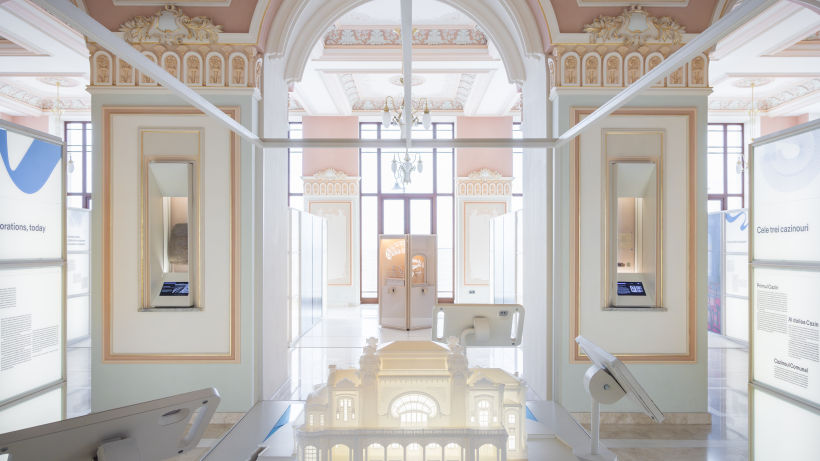
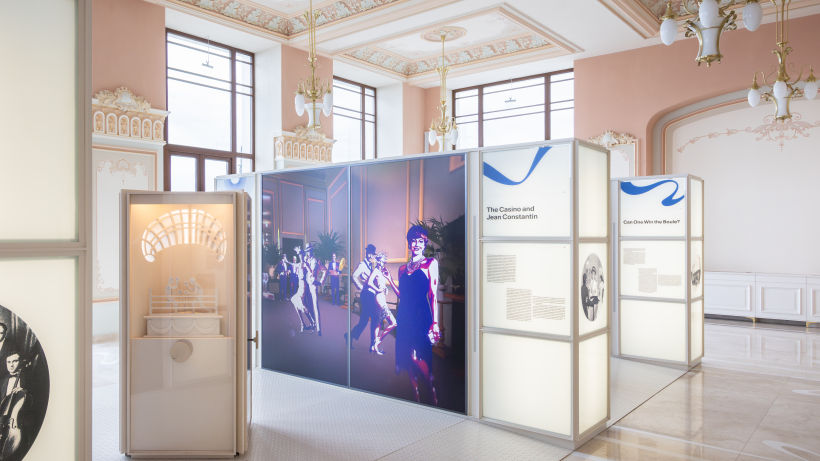
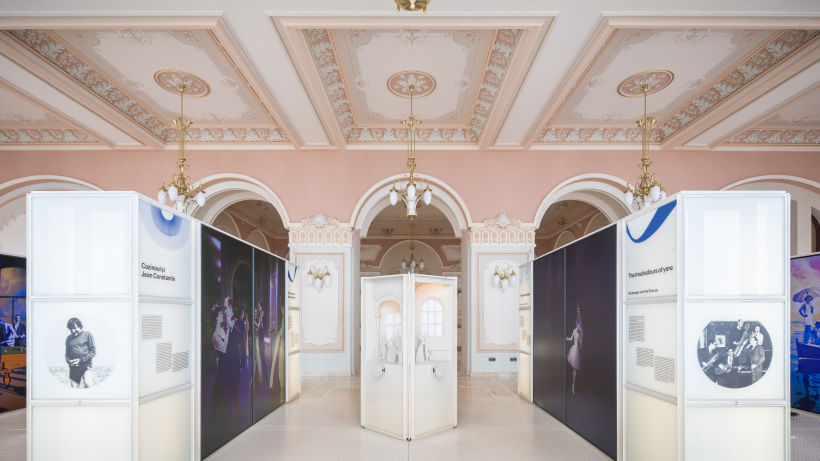
First of all, the installations in the exhibition respect and enhance the monument-building, the casino architecture being treated as an exhibit in itself. The configuration and placement of the exhibition furniture and lighting, as well as the visitor routes, emphasize the spatial logic of the building, privileging the best perspectives on the iconic architectural elements (shell windows, columns, openings between spaces, monumental staircases, stained glass windows, etc.).
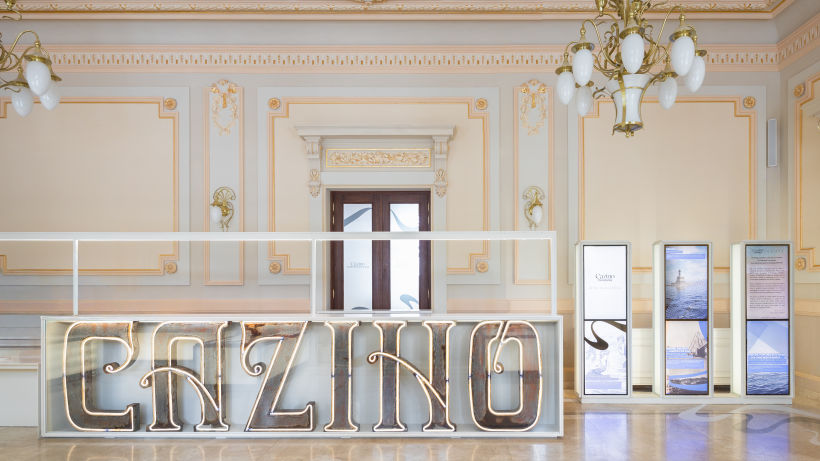
The metal facade sign with the name Casino, which many visitors to the seaside remember from a few decades ago, is recovered for the space dedicated to the reception.
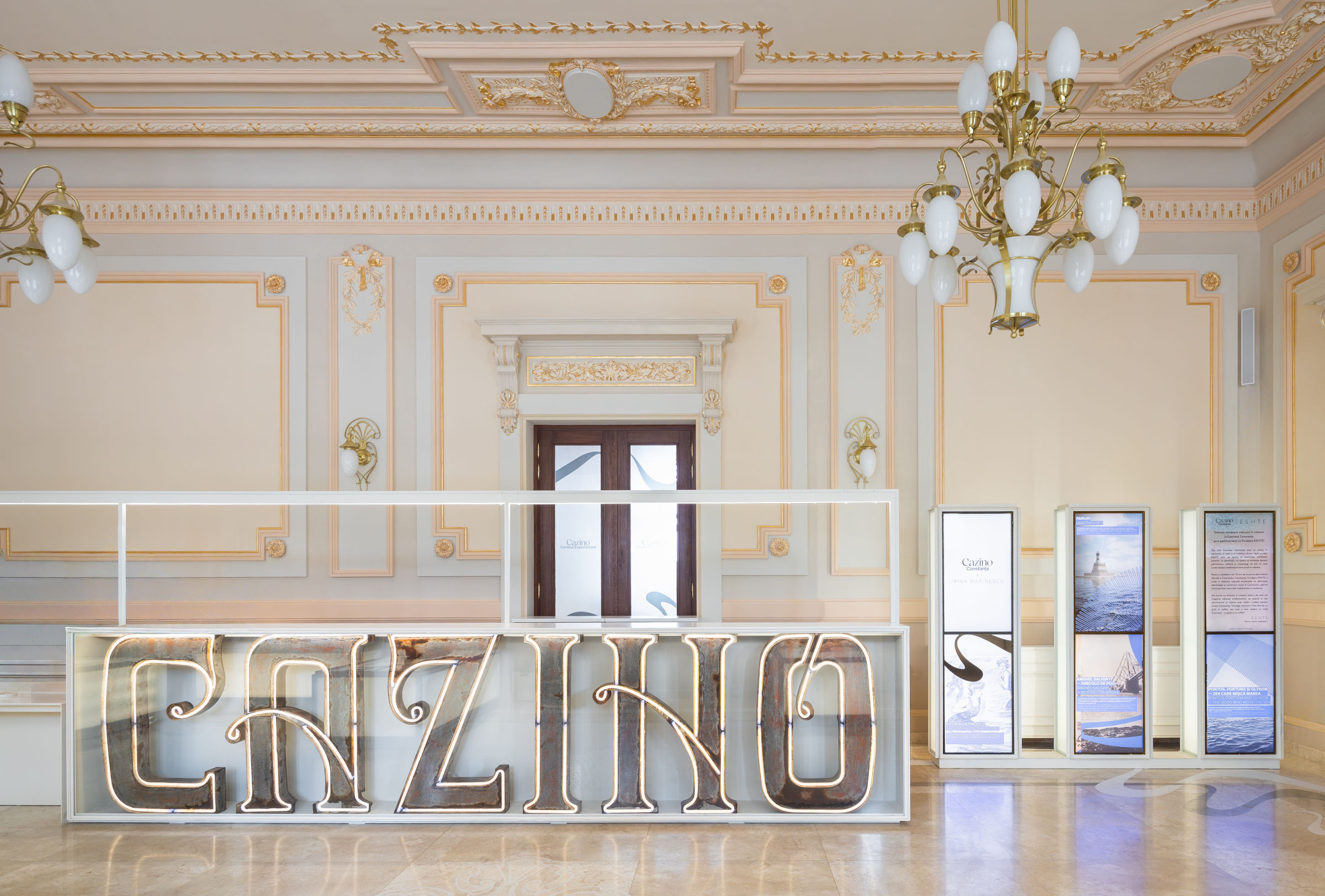 *Ground floor reception. Recovery of the old sign
The display cases in the ground floor hall are oriented perpendicular to the facade with windows facing the sea, to leave the panorama of the water free.
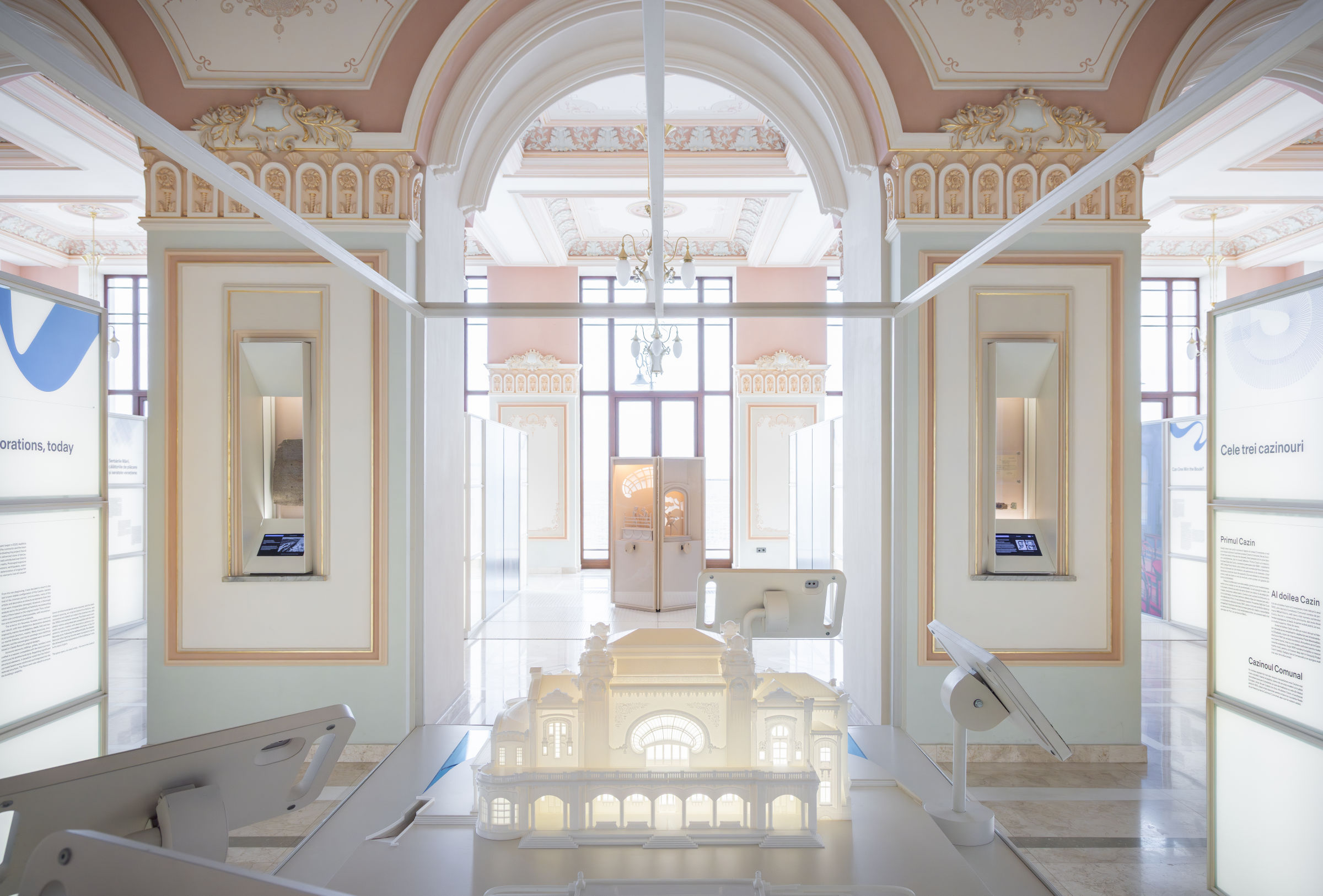 *Ground floor. Building history : AR installation with the model of the Casino
The modular system for temporary exhibitions on the first floor is made of a transparent metal grid, to ensure the passage of natural light and a presence as discreet as possible.
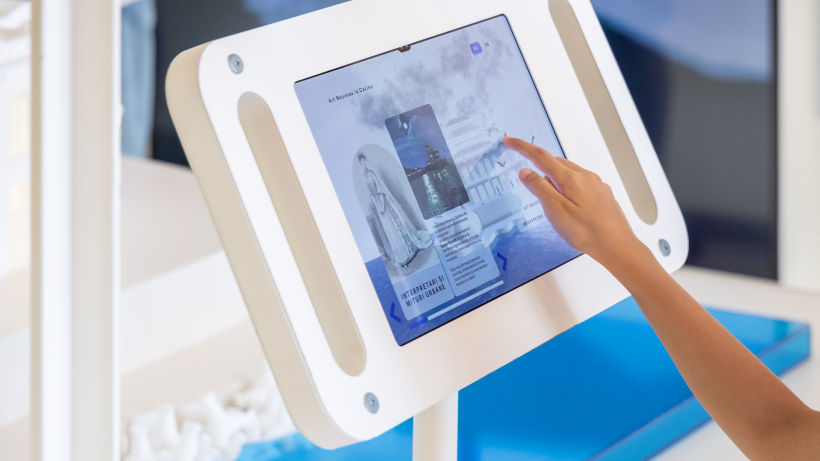
Secondly, the intervention in a highly ornamented and decorated context requires a minimal physical occupation of the space and a minimalist aesthetic of the exhibition systems, the information content being offered in extensive multimedia formats (augmented reality, virtual reality, films, animations, 3D visualizations, sequential immersive experiences, digital content navigation, etc.). Also for a minimal occupation of the space, the notes written by the political prisoners who worked on the reconstruction of the casino in the 1950s, found with the uncovering of the masonry, are exhibited in niches existing in the volume of the columns on the ground floor, instead of dedicated showcases.
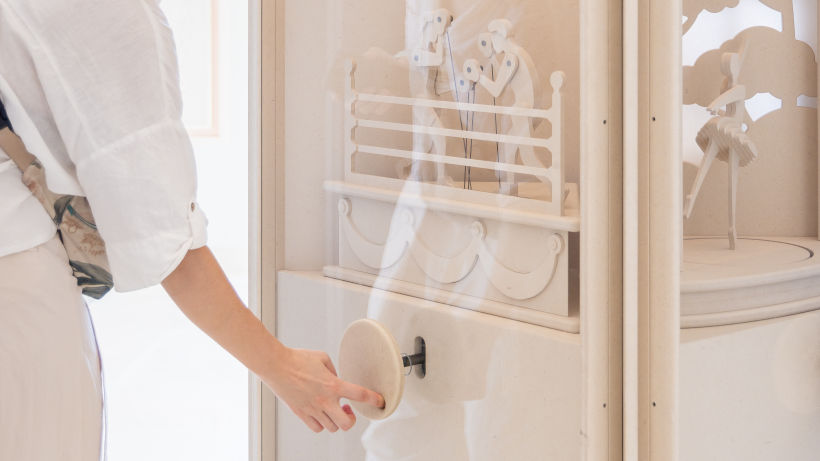
Finally, for a wide cultural audience, in a building by the sea, the transfer of knowledge is done in an experiential and playful way, unlike traditional museums where the approach is pedagogical, unidirectional. In this regard, all exhibitions feature interactive installations, with intuitive, accessible functionality that season the most serious historical or scientific information with a dose of humor.
Ground floor: History of the Casino
From the vision of King Carol I and the talent of architect Daniel Renard to the transformations it has undergone over more than a century of life, the Casino has witnessed the brilliance and decline of worlds, withstanding wars and other terrible moments, followed by repairs and reinventions.
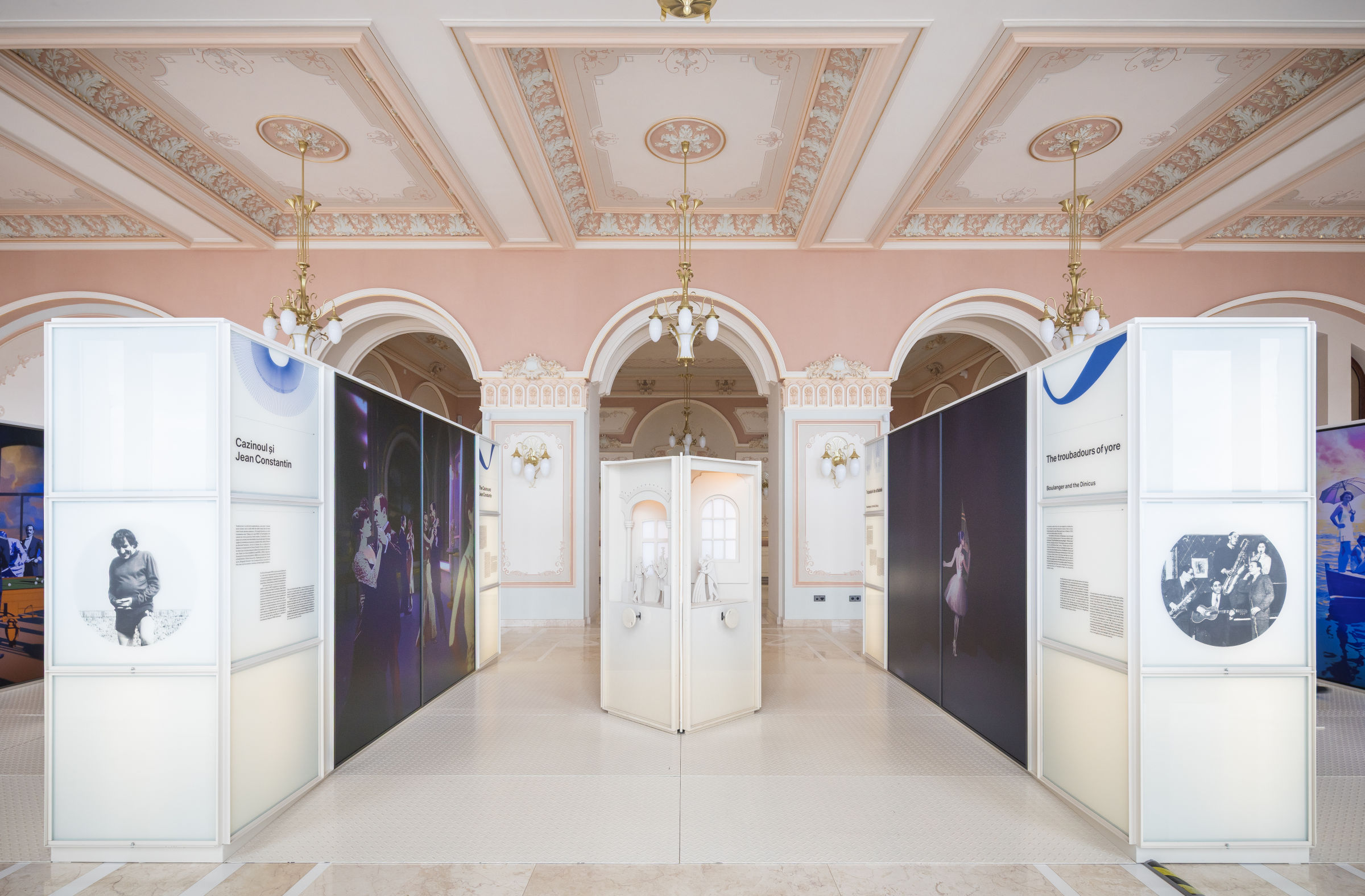
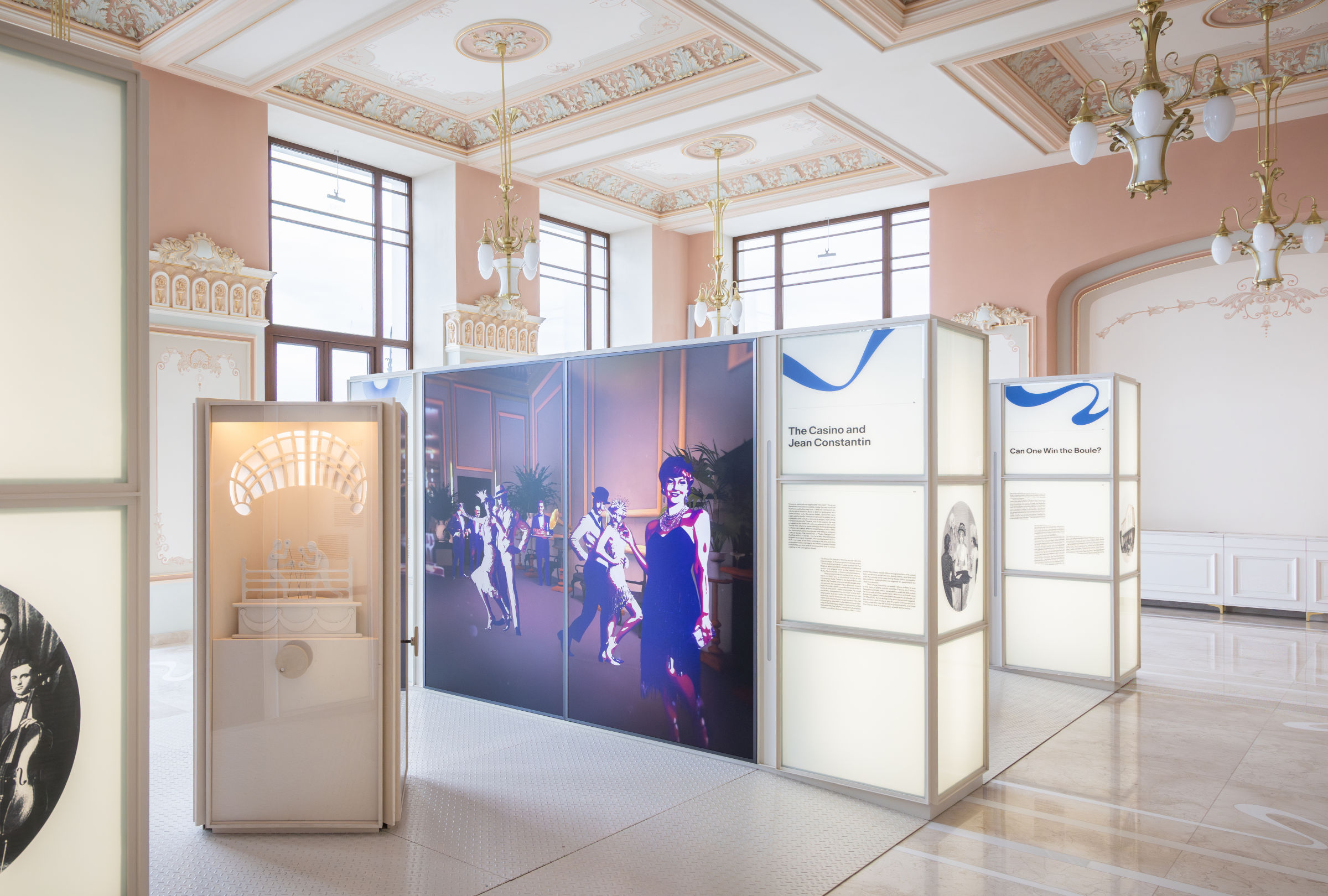 *Ground floor. Building history: mechanical installations and multimedia screens
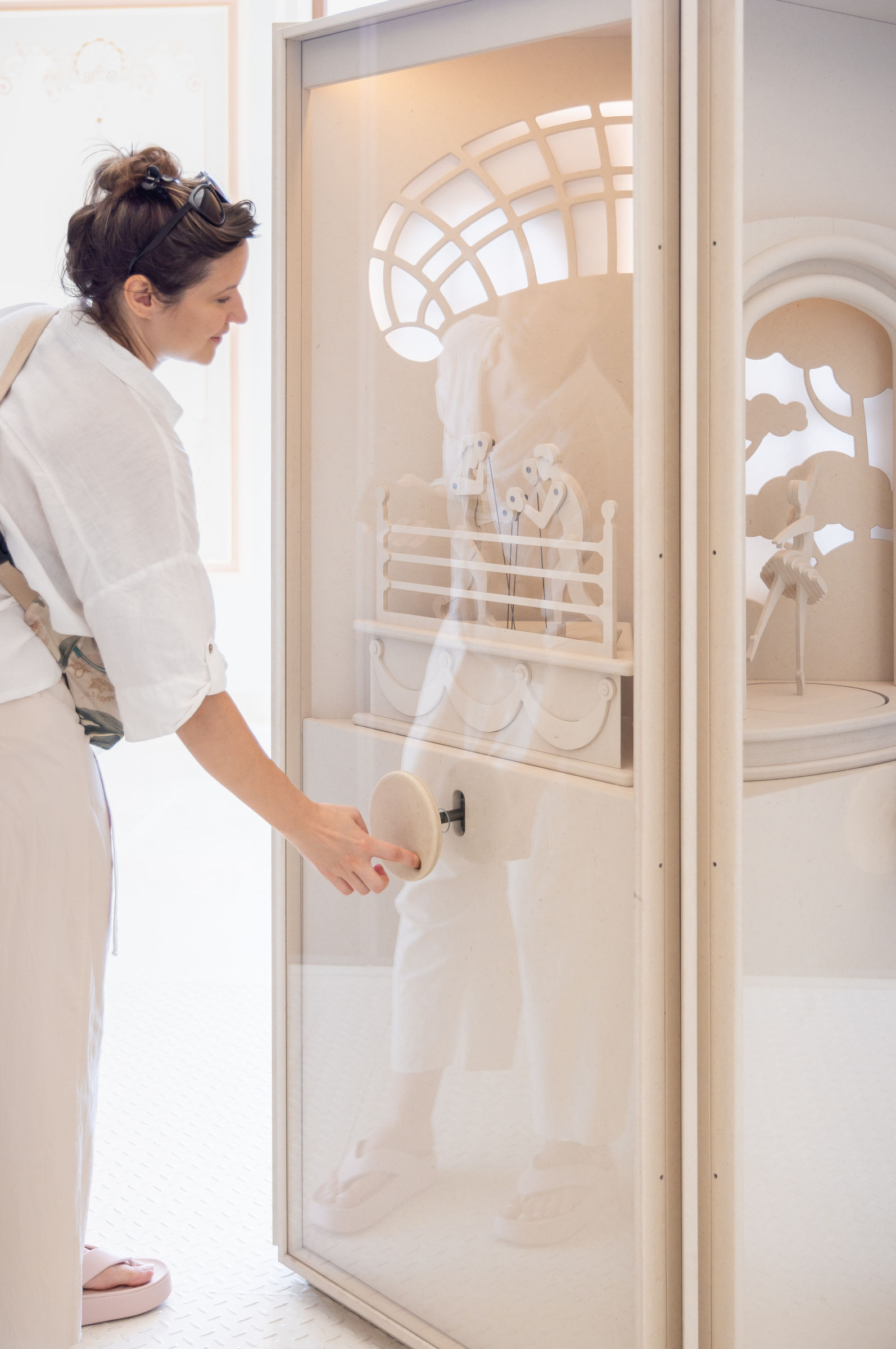 *Ground floor. Building History:Interactive, hand-operated kinetic installation
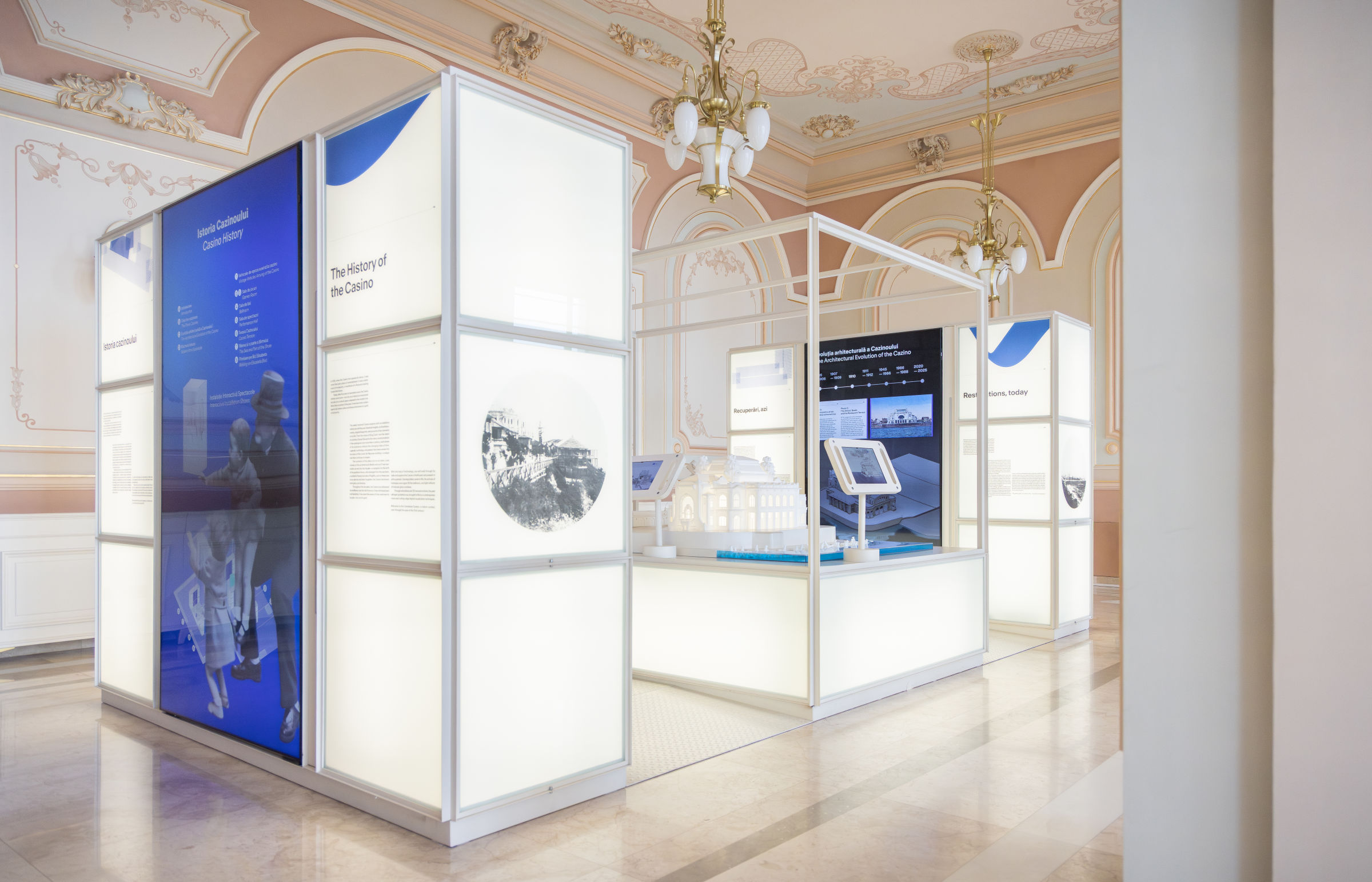
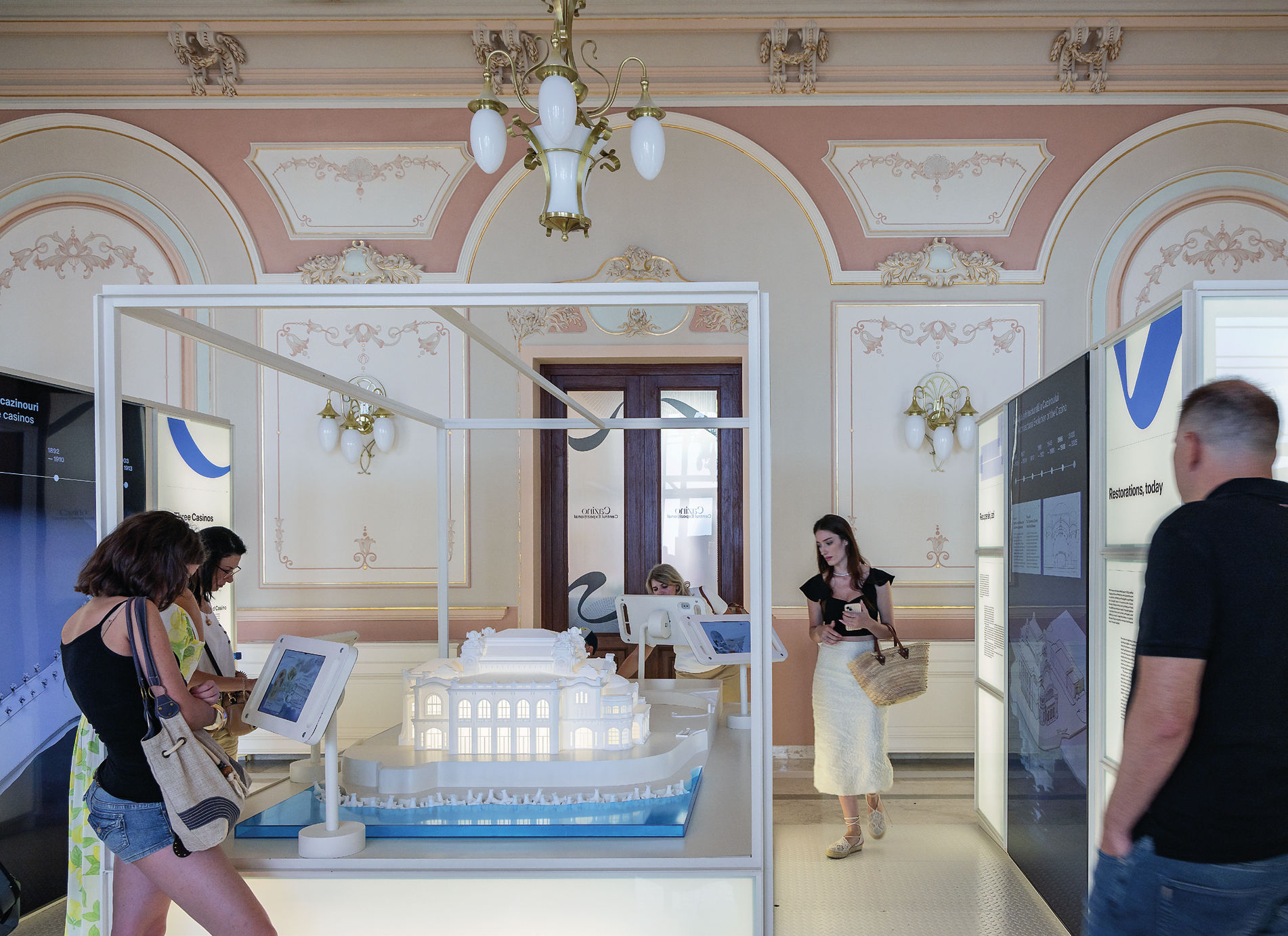
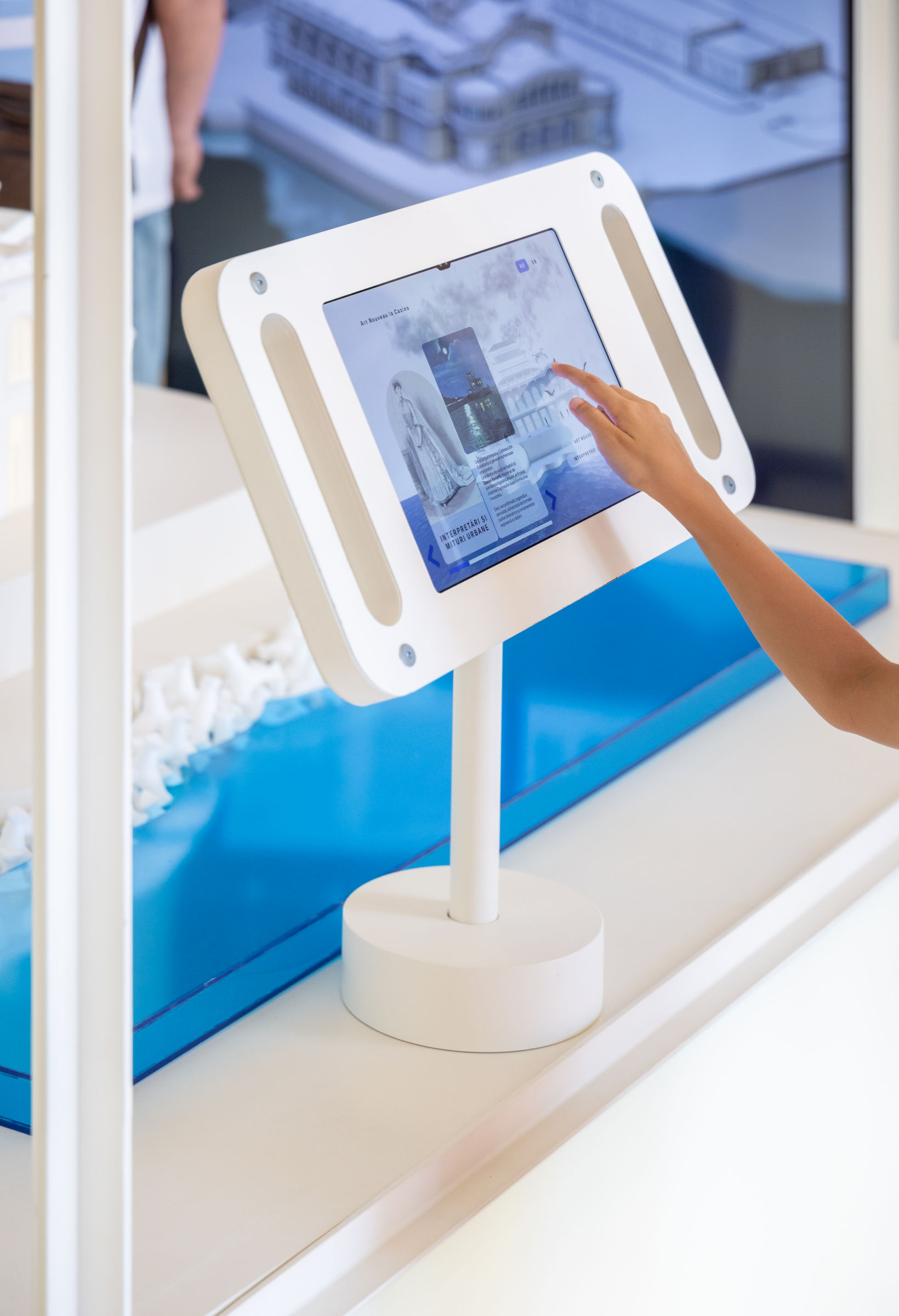 *Ground floor. Building history : AR installation and multimedia screens
Basement: Tales from the depths of the Black Sea
Ovid’s Metamorphoses: An immersive show about the creation of the world, gods, humans, love, war and destiny, inspired by the masterpieces Metamorphoses and Tristele: Letters from Pontus by the great Roman poet Ovid, exiled in Tomis.
In Search of Noah’s Ark: A VR exploration of the wrecks of the Black Sea: from Greek and Byzantine ships, to interwar cargo ships, modeled after real archaeological discoveries – some preserved almost entirely underwater.
The Gods Who Move The Sea: A symbolic map of the sea presents the forces of the ancient deities Pontos, Fortuna or the Glycon Serpent, who unleash storms, lightning and waves, in an interactive experience.
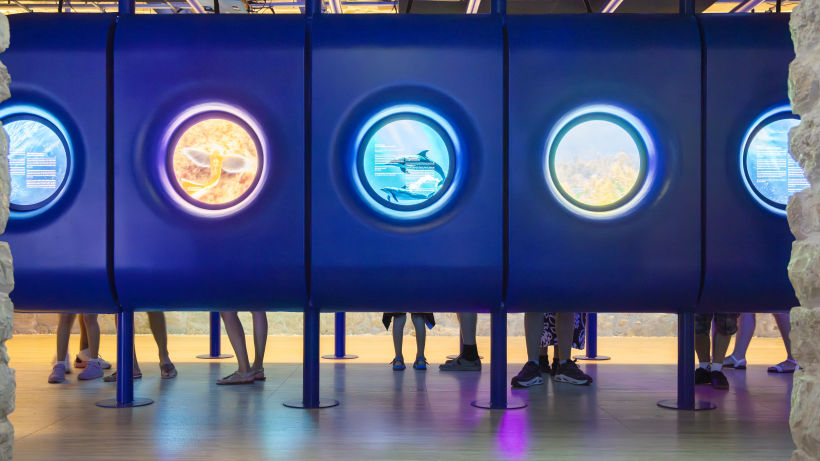
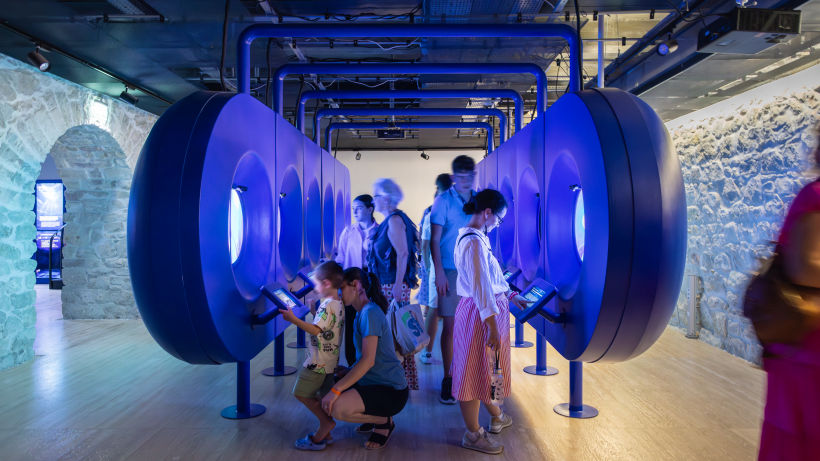
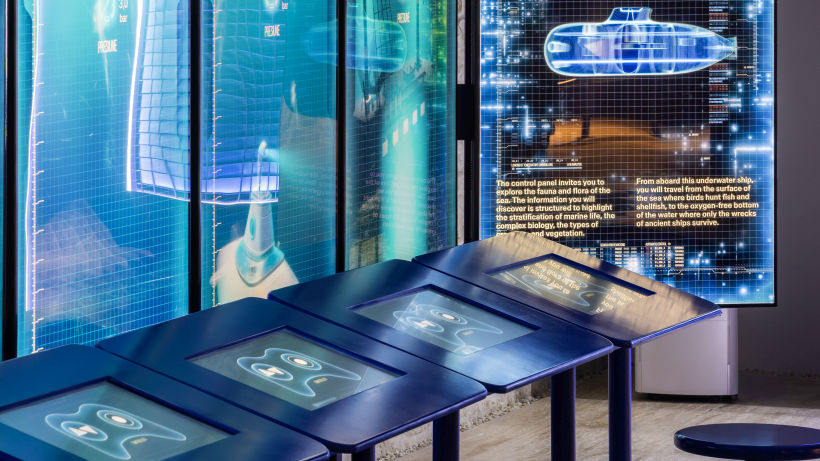
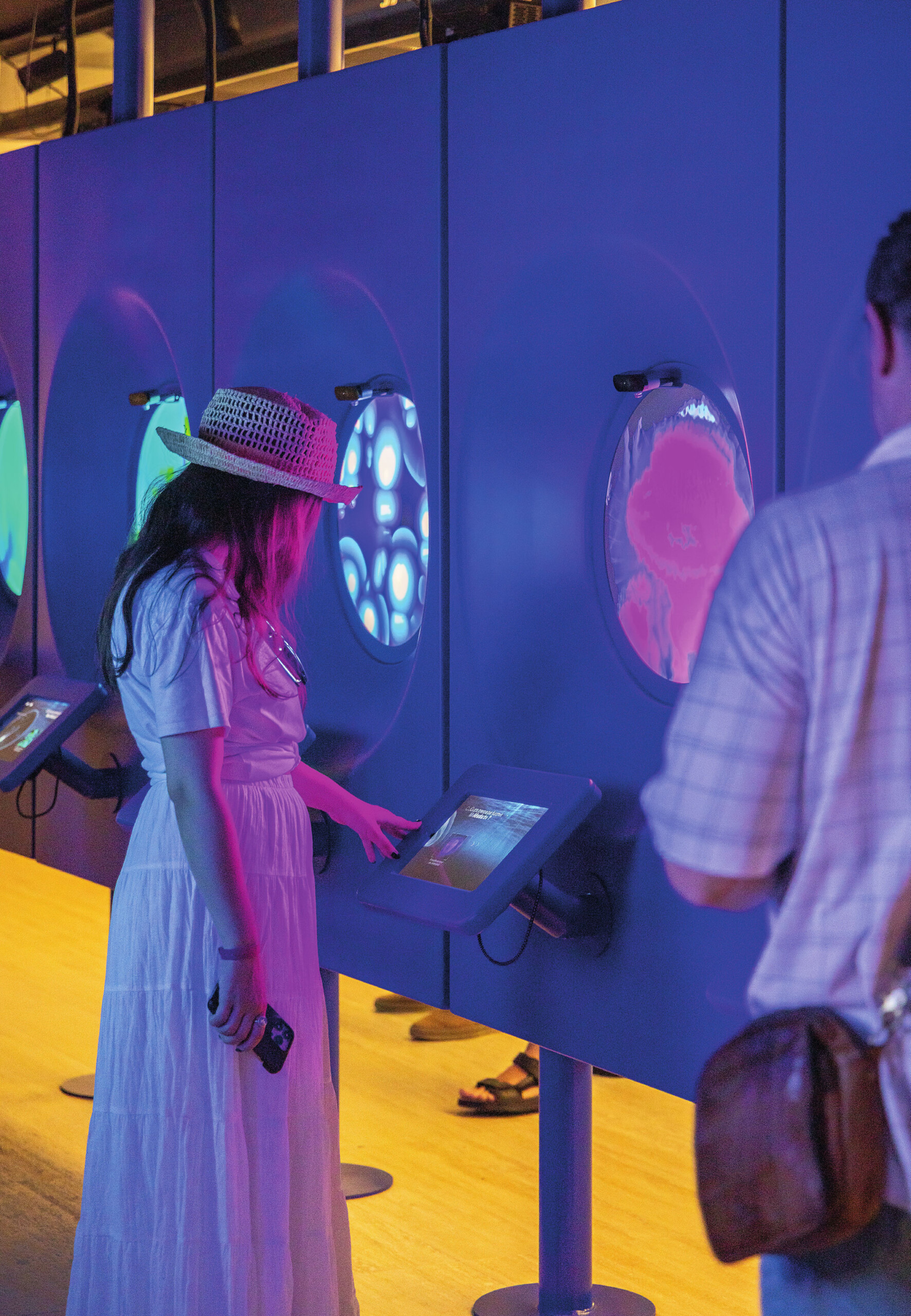
The Depths of the Black Sea: The control panel makes it possible to explore the stratified life of the Black Sea, from birds of prey on the surface of the water to ancient shipwrecks in the depths, in a fascinating underwater journey.
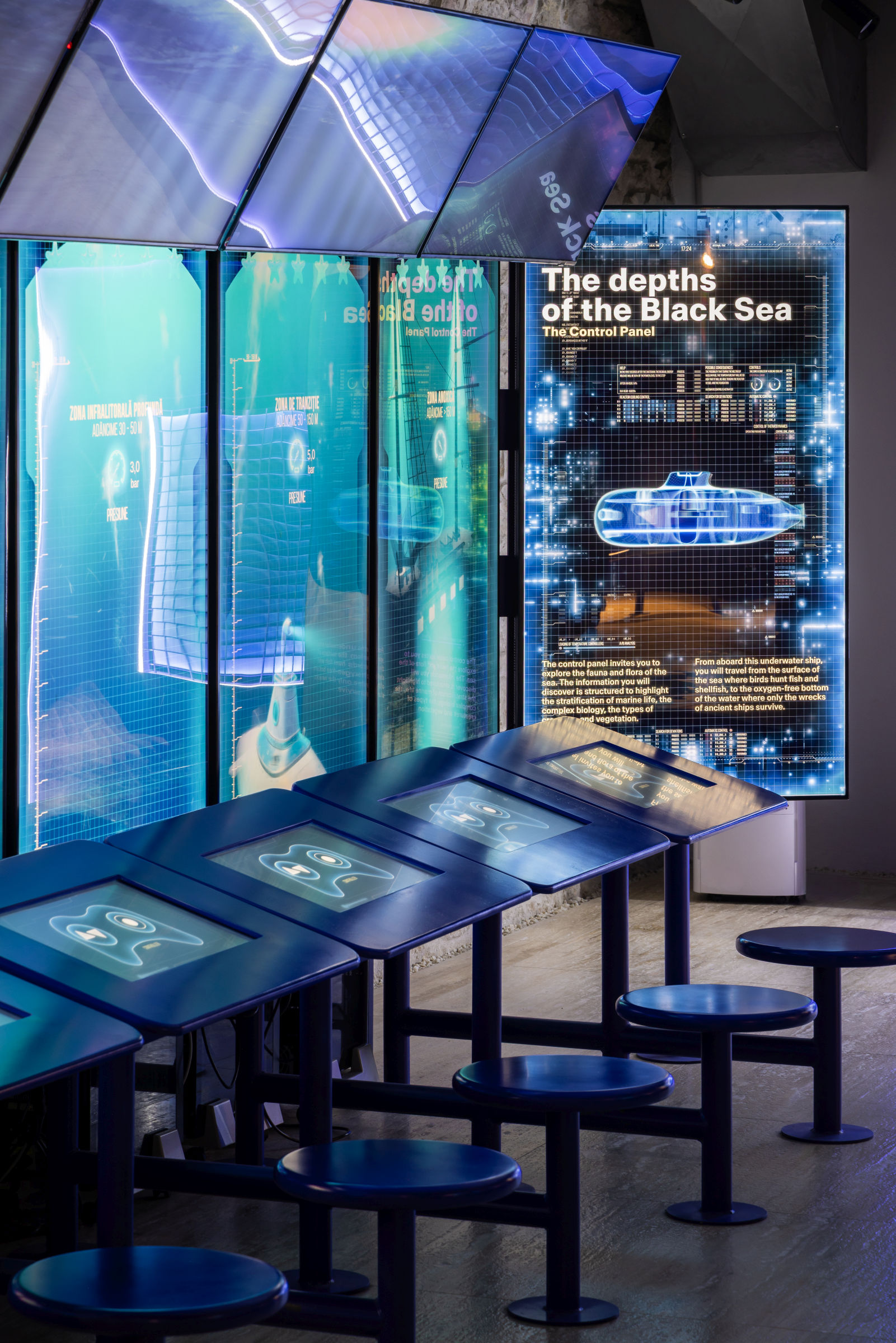 *Tales from the depths of the Black Sea. „The Depths of the Black Sea” multimedia installations, control panel
The ARGO Submarine – A Journey to the Depths: A multi-modal and multi-sensory experience to explore the complex ecosystem of the Black Sea, discovering how marine life perceives light, protects itself and orients itself.
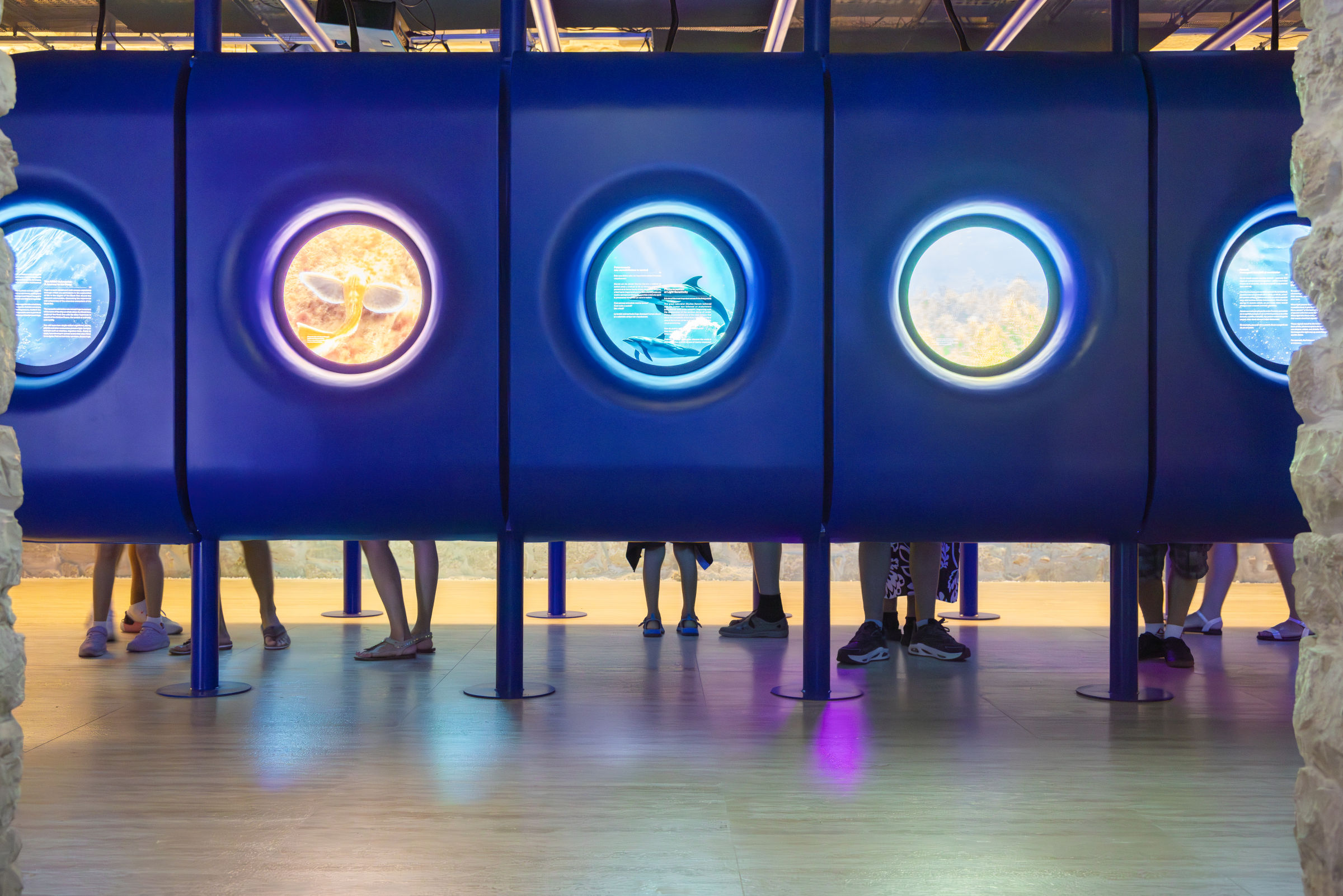
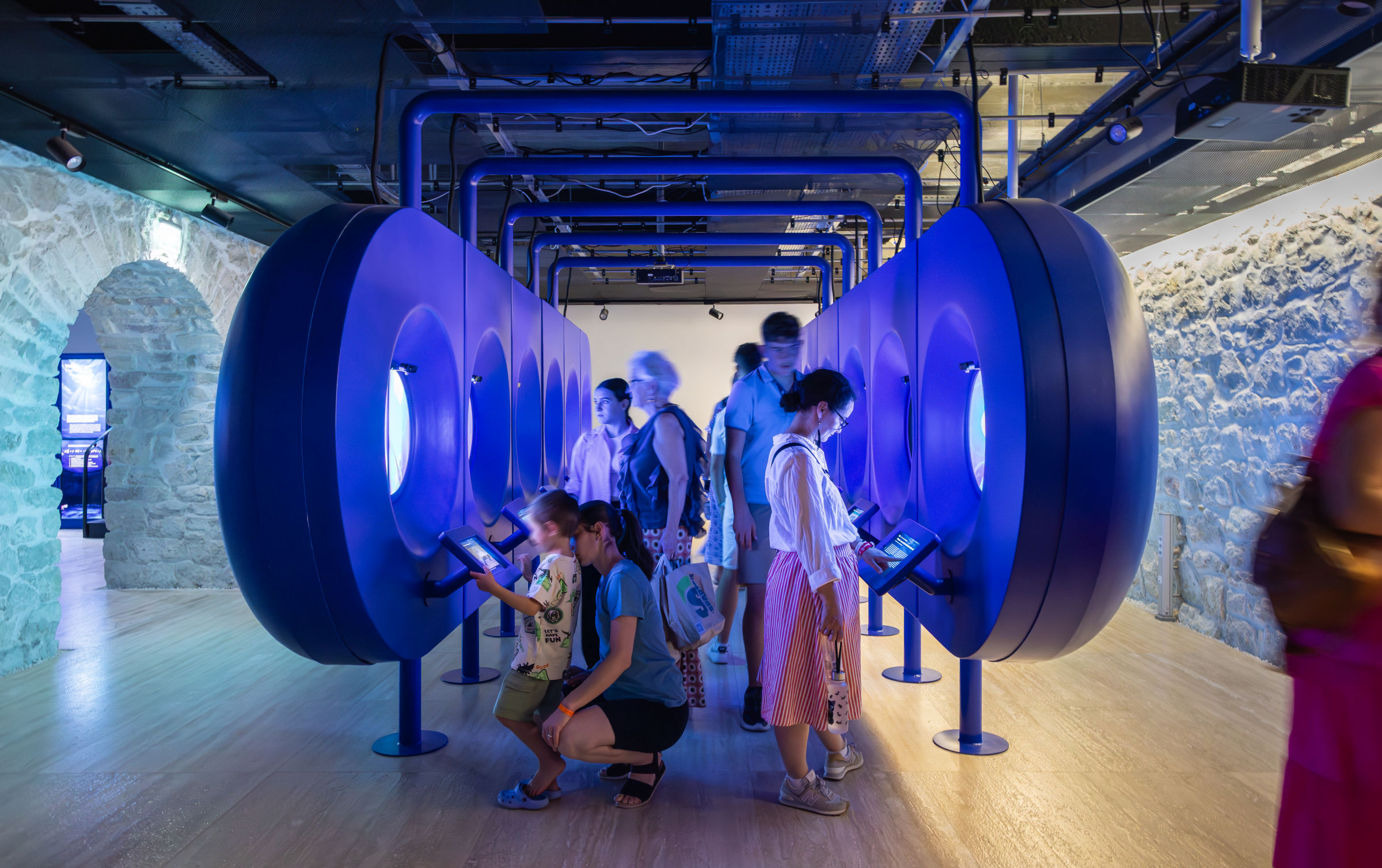
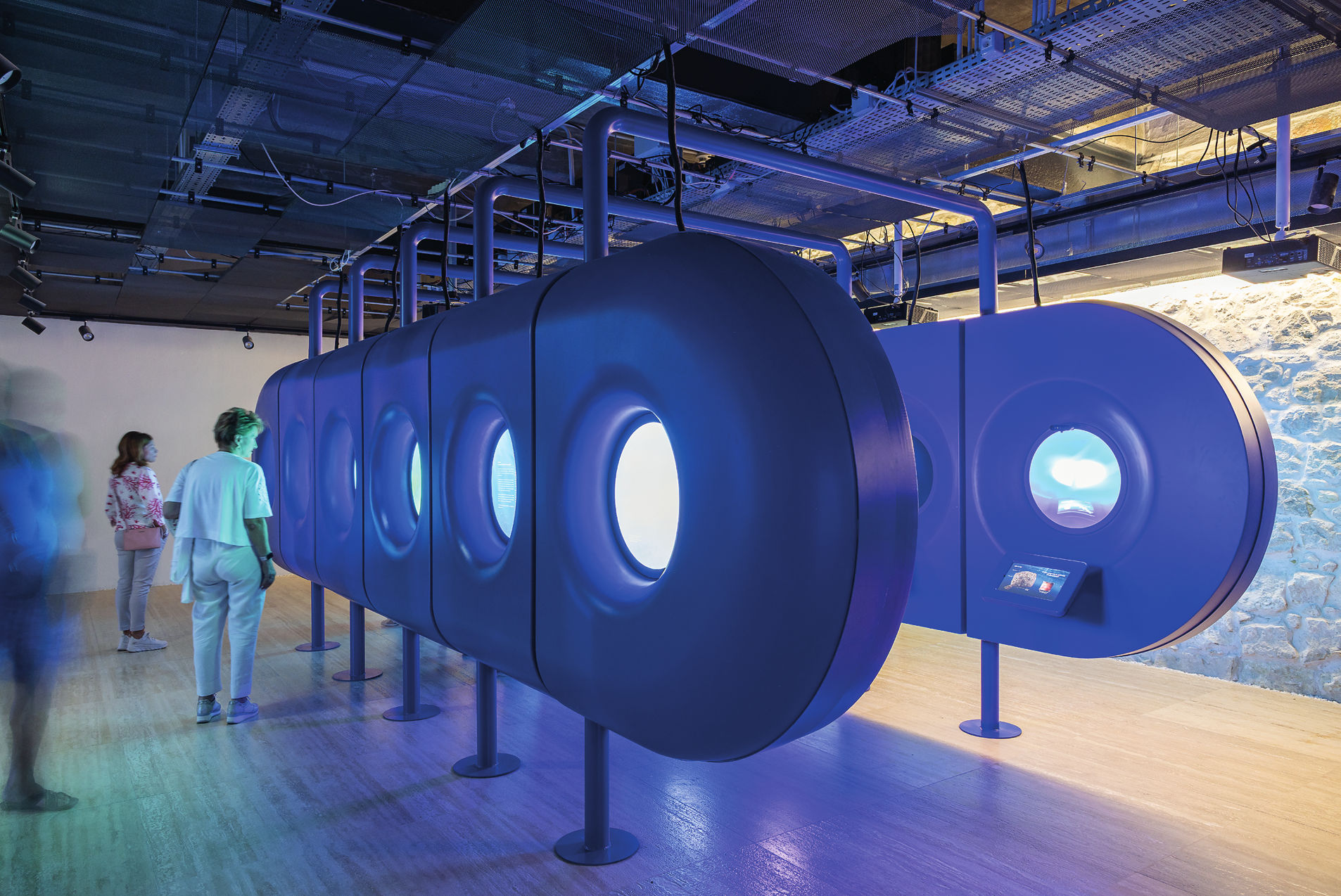
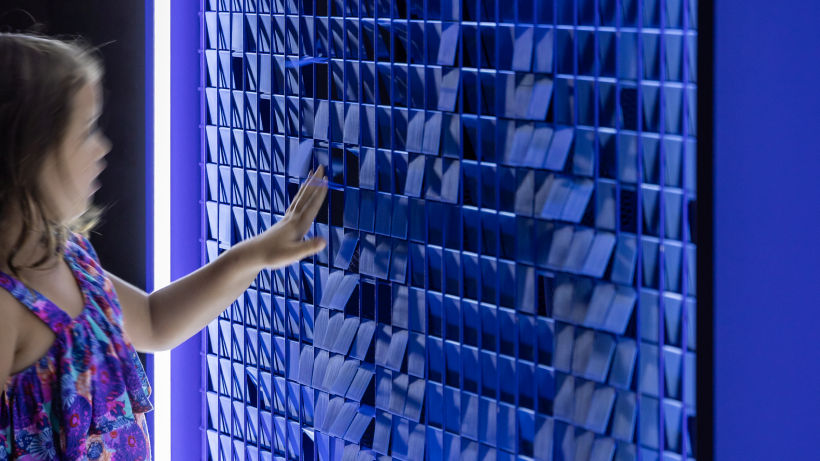
The Wave: An interactive installation simulates the formation of waves from water and wind, against the backdrop of the hazards of the sea, where science and faith in the gods meet in front of untamed nature.
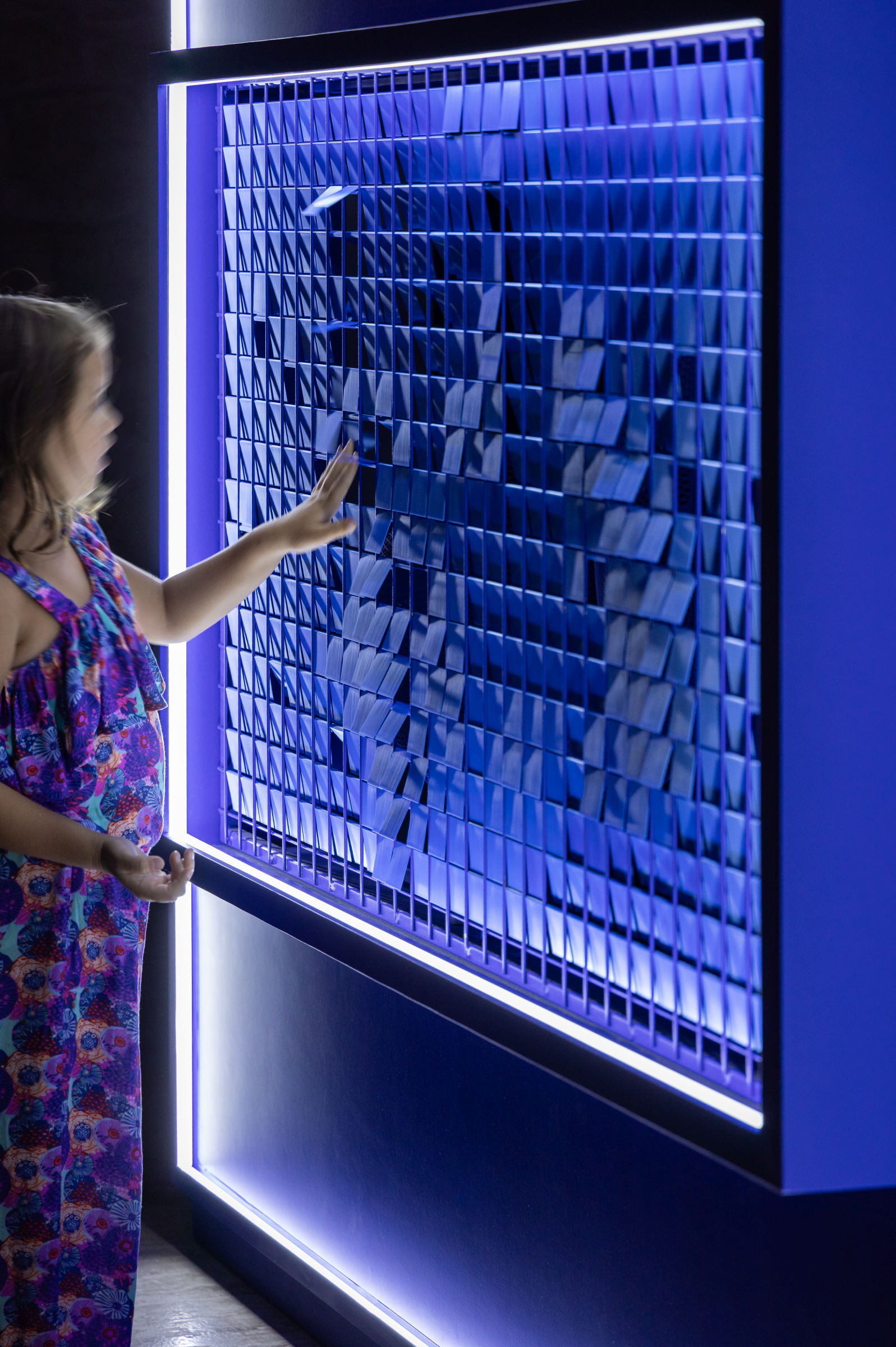 *The Wave: An interactive installation
Diving suits: A history of underwater diving: from Alexander the Great’s glass bell 300 years before Christ, to the discoveries of Commander Constantin Scarlat – the founder of the first combat diver unit in Romania, and the participation of Romanian military divers in NATO mine neutralization missions in the Black Sea today.
First floor: Anghel Saligny – Beyond the Bridge
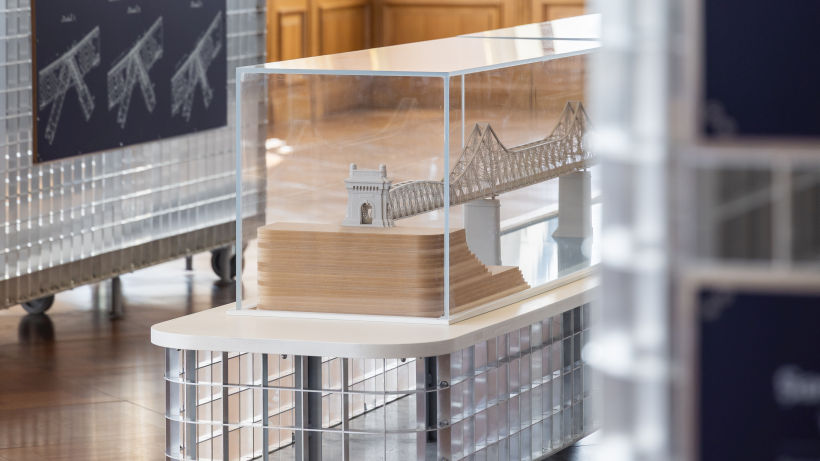
The first temporary exhibition is dedicated to Anghel Saligny – a visionary engineer who had a clear mission: to build a solid infrastructure network in the service of a strong and modern state. This system also included the ensemble of bridges over the Danube, the most important being the King Carol I Bridge in Cernavodă, and the modernization of the Port of Constanța (silos, power plant, Royal Pavilion, tunnel, lighthouses, oil station, railway network, quays, port buildings, coast line).
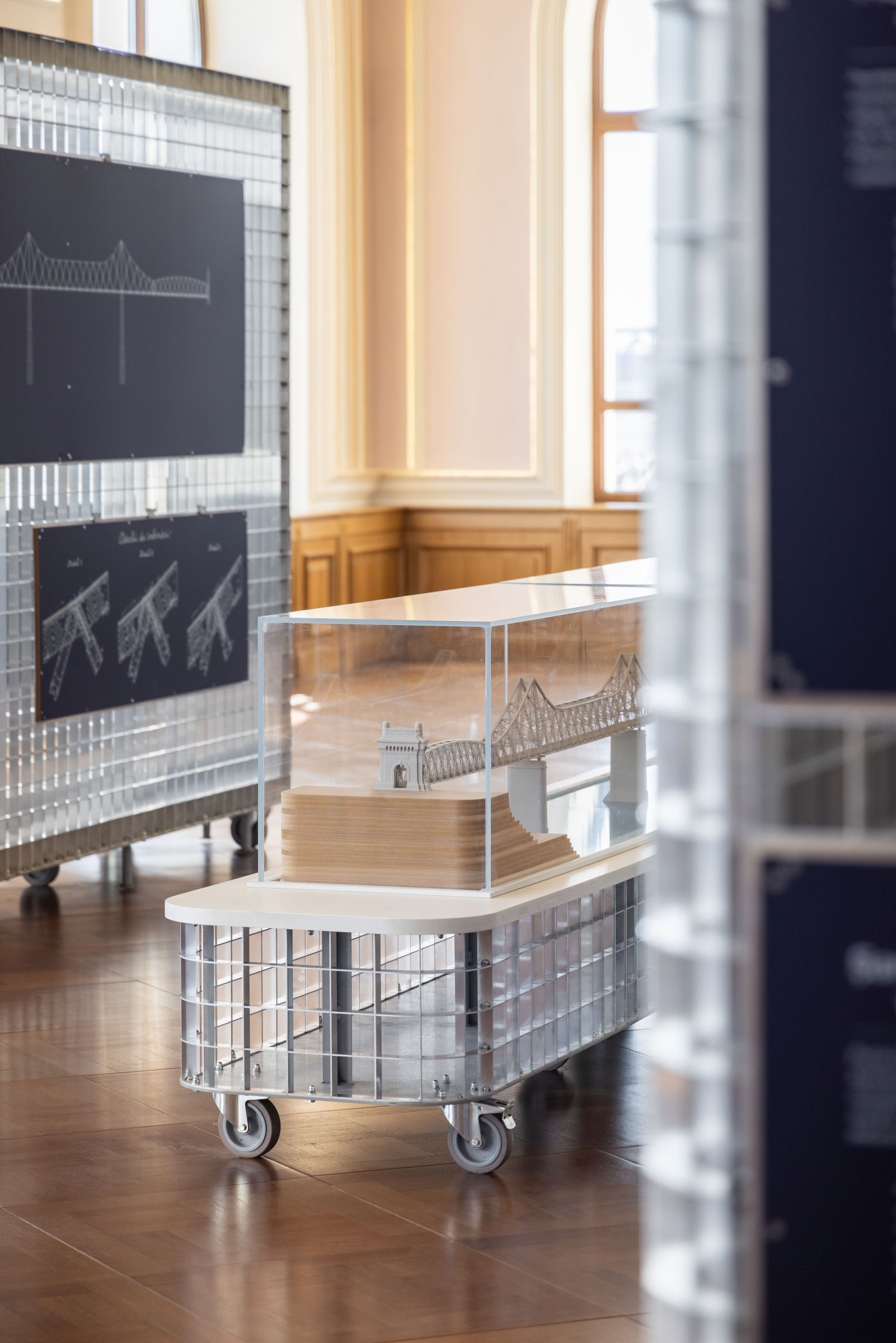 *First floor. „Anghel Saligny – Beyond the Bridge” temporary exhibition. Detail of the 3D model of the Cernavodă Bridge
Info & credits
Project funded by Constanța City Hall
DESIGN TEAM:
Constantin Goagea, Cosmina Goagea, Cristina Ginara-Ivanof, Mara Stancu, Ana Constantinescu, Lisa Dres, Andrei Dilă, Mihail Sibiceanu, Mădălina Stănășel, Dinu Hoinărescu, Justin Baroncea, Alexandra Muller, Razvan Turcanu, Maria Ghement, Alexandru Rîță
CONTRIBUTORS:
HISTORICAL RESEARCH AND TEXTS
Cristian Cealera, Marius Cosmeanu, Alexandra Stoica, Apollon Cristodulo, Mădălina Mirea
Youth Vision for Society (YVS) Association –
Project Manager: Cristina Stângu, Project Coordinator: Alexandra Barbu, Researcher: Andreea Cel Mare, Financial Manager: Bianca Șerban, Historian & Guide: Raul Ivan, Media & Communication: Iuliana Urîtu, Iliea Omer, Media & Photo: Alina Verban
RESEARCH PARTNERS
National Museum of History and Archaeology, Constanța
National Heritage Institute
GeoEcoMar – National Institute for Research and Development in Geology and Geoecology
MINA
The Romanian Order of Architects, through Architectural Duty Stamp and The King’s Foundation
MULTIMEDIA DESIGN
Les Ateliers Nomad
Alexandru Berceanu
Dilmana Yordanova
Ovidiu Eftimie
Cristian Dorobănțescu
SOUND AND MUSIC DESIGN
Vlaicu Golcea
GRAPHIC DESIGN
Policromic
Artemisa Pascu
Andrei Grosu
EXHIBITION SYSTEM PRODUCTION
Kaustik
Pliabil Studio
3D PRINTING: We mesh up – Andrei Constantin Lixandroaia Dena, Cosmina Elena Lixandroaia Dena
MECHANICAL INSTALLATIONS
Atelier SET
OBJECTS ON DISPLAY FROM THE COLLECTIONS OF
Gabriel Puchiu, Pascale Roibu, Apollon Cristodulo, Aristide Cristodulo
National Museum of the Romanian Navy – Constanța
IMAGE SOURCES
Youth Vision for Society Association Archive
Zeppelin Design collection of illustrated postcards
Romanian Railway Museum – CENAFER
Romanian National Archive, Constanța County Office Museum of National History and Archaeology, Constanța Maritime Ports Administration SA, Constanța National History Museum of Romania Alexandru Bădescu collection Europeana
PHOTOGRAPHY:
Vlad Pătru